Categories
art history

Accidentally Acquiring Frank Lloyd Wright’s Music Stand

Note: Here’s the first blog post in reference to a certain little proposal I previously proclaimed. This was my blog submission to join DPL’s blog team in 2019. For context, the prompt was: “Write about the 2nd most interesting thing on your floor (for Central branch) or branch. Don’t write about the most interesting thing. I want the 2nd most interesting thing.” 

__________________________________________

From free music classes to rotating art exhibitions by local artists, there are many interesting things on the Fine Arts floor of the J. Erik Jonsson Central Library. Now, as Art Librarian, I find nothing more captivating than our superb art collections—it’s prints and artists’ books galore over here! But the second most interesting thing? That would have to be our Frank Lloyd Wright Music Stand.
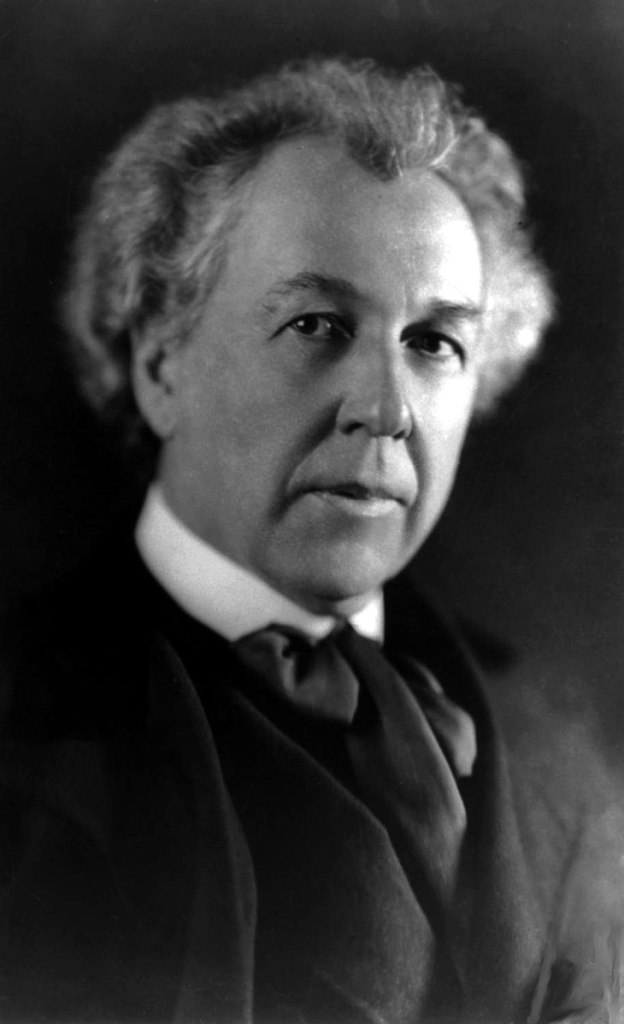
Frank Lloyd Wright, c. 1926. According to Wikipedia, this image in the public domain.

Arguably the greatest American architect of the 20th century, Frank Lloyd Wright loved music as well, designing and building the visionary (yet impractical) music stand before us. Only six other music stands are known to exist in the world, and the Dallas Public Library was lucky enough to have accidentally acquired such a rare musical treasure.

“Accidentally?” you ask. Yes, accidentally.

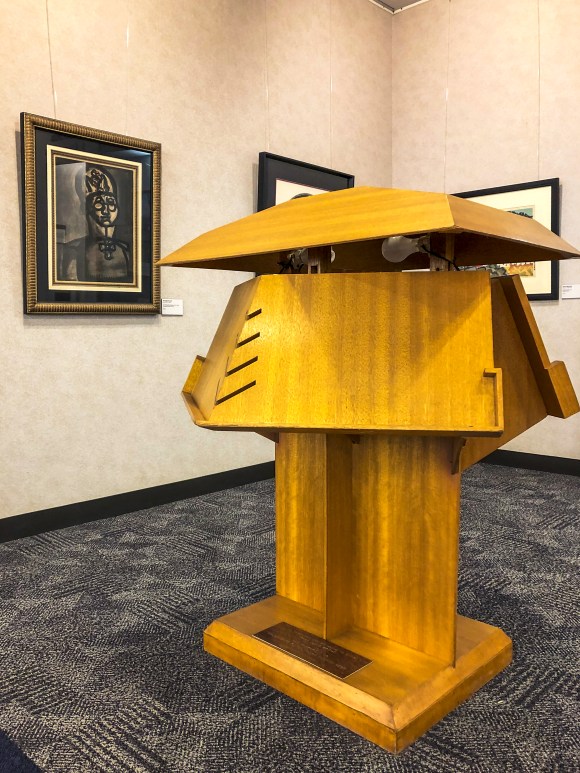
Frank Lloyd Wright Music Stand, Fine Arts Division, J. Erik Jonsson Central Library, Dallas, Texas, 2019.

Music played a profound role throughout Frank Lloyd Wright’s life and work, taking up the piano and violin as a child. It also didn’t hurt that his father, William C. Wright—a musician and preacher— taught him “to see a great symphony as an edifice, an edifice of sound, you see. So when I listen to Beethoven, who is the greatest architect who ever lived, I never fail to see buildings. He was building all the time. He was a great composer also. So never miss the idea that architecture and music belong together. They are practically one.”

In 1932, Wright and his wife, Olgivanna, created the Taliesin Fellowship: an apprenticeship program emphasizing the basic philosophy of “learning by doing” and community living. Under Wright’s guidance, aspiring architects lived, worked, and studied at his Taliesin estate in Spring Green, Wisconsin, in what could only be described as an all-encompassing learning environment.

Apprentices not only participated in carpentry, drafting, and furniture building— among other hands-on architectural tasks—Wright also encouraged his young protégés to explore different talents, such as cooking, sculpture, and music. Those who took up an instrument or sang were often invited to perform for the Wrights and their guests following lavish dinner parties frequently thrown at their home.

John Rosenfield, arts critic for The Dallas Morning News, and frequent visitor to Taliesin, wrote in his column, Frank Lloyd Wright Stand (May 6, 1956), that “very little that happens to Wright fails to stir the builder in him…the spidery wire music stands around which a string quartet deploys itself never has failed to irritate the host. Sooner or later Mr. Wright had to do something about it.”
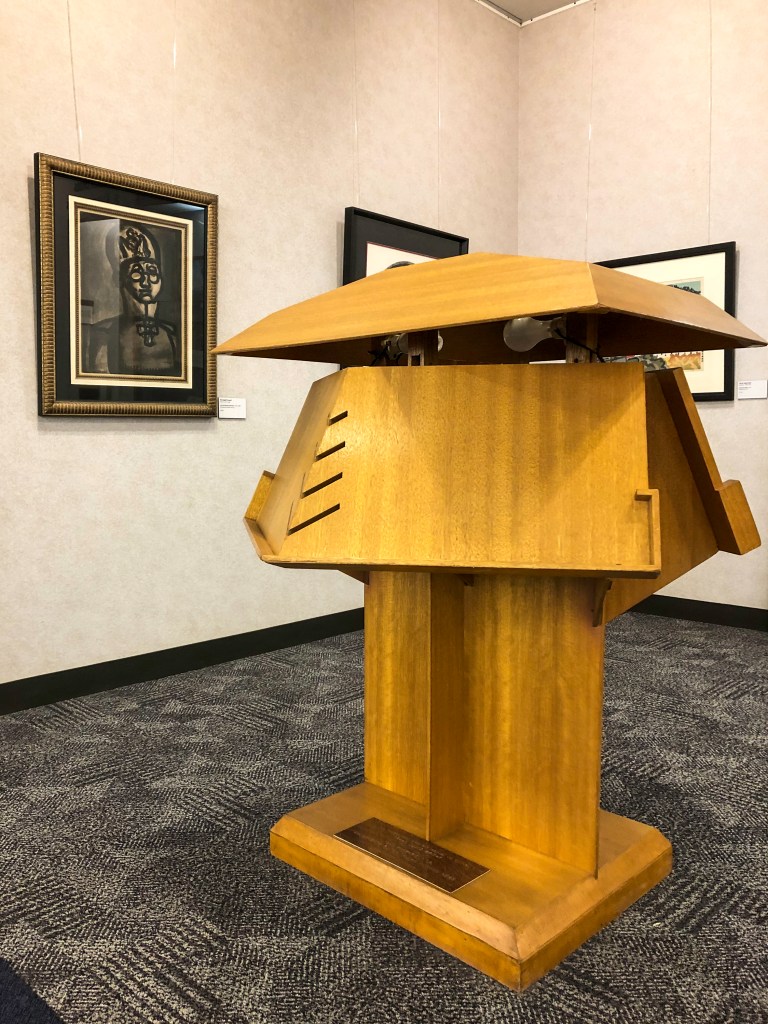
Frank Lloyd Wright Music Stand, Fine Arts Division, J. Erik Jonsson Central Library, Dallas, Texas, 2019.

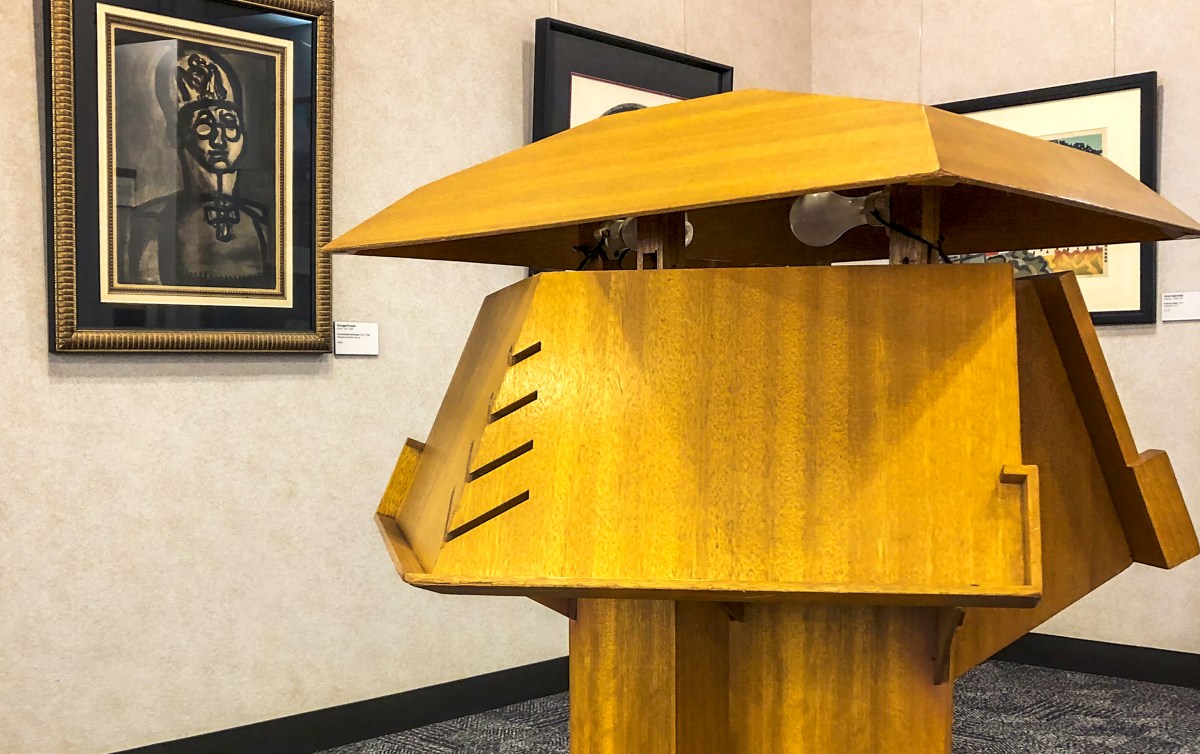
And do something about it, he did. Wright soon designed a wooden one-piece quartet music stand, surmounted with an elegant canopy and four small lights installed underneath to illuminate the sheet music on each facade ledge. Rosenfield even commented that the amateur musicians playing on the sculptural stand “sound better because they look better.”

Rosenfield was so enamored by what he described as “a triumph of visual integration without distraction” that he persuaded the architect to build an exact copy of the music stand. It was delivered on April 1, 1956, and then displayed at The Dallas Morning News offices for a short period. Later, he placed the music stand on indefinite loan with the Dallas Chamber Music Society. The arts critic hoped the music stand would find a permanent home with the DCMS, as he imagined no musician would deny using an original Frank Lloyd Wright design to maximize their performance. However, Dorothea Kelly, artistic director of the DCMS, later confessed at a retirement dinner for Rosenfield that “the first concert we tried it, the musicians found it impossible to use. There wasn’t space to turn pages and the lights didn’t shine on the music.”

Did aesthetics mean nothing to these musicians? 

Fortunately for us, the Dallas Chamber Music Society’s loss was the Dallas Public Library’s gain. As it happened, Rosenfield was close friends with George Henderson, manager of the Fine Arts Division at the J. Erik Jonsson Central Library, who wanted to borrow the music stand for an exhibition at the library. Sometime later, Kelly was confronted by DCMS President Howard Payne, who “asked why I had given away the stand without the knowledge of the board. ‘Given away?’ I asked in amazement. ‘Yes,’ said Mr. Payne, ‘haven’t you seen the lovely plaque on it which says, ‘Given to the Public Library by The Dallas Morning News and John Rosenfield?’” Perhaps Rosenfield gifted the music stand to DPL  himself, as it was not as appreciated by the DCMS as he had hoped. As far as the rest of the Society was concerned, it was accidentally given to the Dallas Public Library. 

You know what they say (and by “they” I mean the late, great Bob Ross): “We don’t make mistakes, we have happy accidents”.
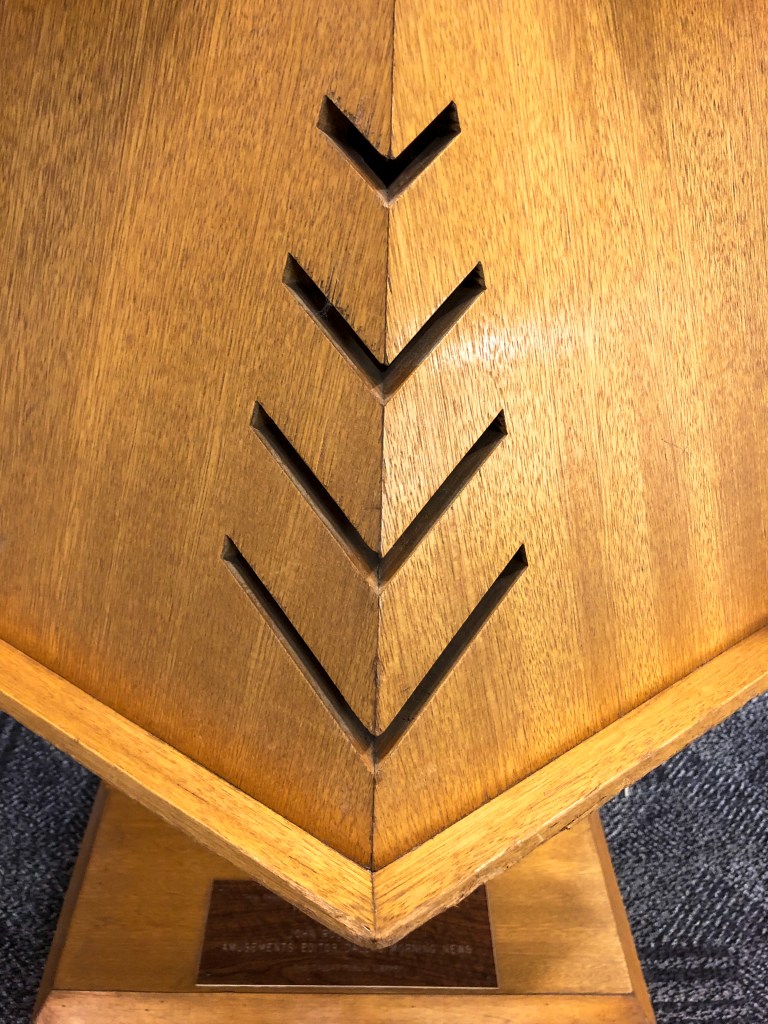
Detail, Frank Lloyd Wright Music Stand, Fine Arts Division, J. Erik Jonsson Central Library, Dallas, Texas, 2019.

Rosenfield and DPL were not the only ones who admired the imaginative music stand, as six others are known to exist today. Wright kept three for himself in his Taliesin (Wisconsin) and Taliesin West (Arizona) estates. A fourth stand resides at the Bethesda, Maryland home he designed for his youngest son, Robert Llewellyn Wright, while a fifth stand occupies the music room at the Zimmerman House at the Currier Museum of Art in Manchester, New Hampshire. The last music stand was built posthumously at the request of Wright’s widow as a gift for Lady Bird Johnson—now on display at the Lyndon Baines Johnson Library and Museum in Austin, Texas. 

As previously mentioned, there are many interesting things on the Fine Arts floor at the J. Erik Jonsson Central Library. But it is hard to compete with the simplistic, innovative design of the Frank Lloyd Wright Music Stand—no matter how impractical it is for “professional musicians”. Sometimes, you just have to suffer for fashion.

Frank Lloyd Wright Music Stand, Fine Arts Division, J. Erik Jonsson Central Library, Dallas, Texas, 2019.


Categories
art art history

Guess who’s back…

I’m back, y’all! Well, sort of. No, I have not written any new art history material. A tiny dictator by the name of Marz rules my life these days. Our world consists mostly of dinosaurs, snacks, and Eric Carle books, which I’m not too upset about.

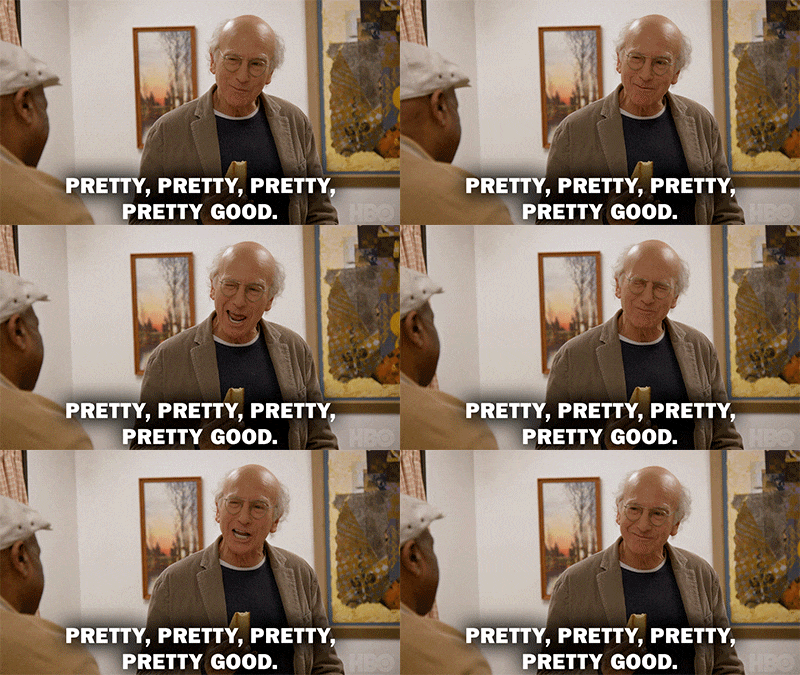
However, I recently learned that the Dallas Public Library’s blog, Booked Solid, is no more. This news was unfortunate for me, considering I wrote some pretty, pretty, pretty good stuff for them as Art Librarian—if I do say so myself.

Larry David approves. Wait, is he in an art museum?

From the history of artists’ books to the brutalist architecture of I.M. Pei’s Dallas City Hall, I wrote several compelling blogs (again, if I do say so myself) for DPL on their notable art collections and local public art between 2019-2021.

From Book as art/art as book: a brief-ish history of artists’ books, written in 2021.

Since I spent so much precious time and energy on each of these glorious art history blogs, I don’t think it’s fair for them to simply vanish into thin air. Therefore, I’m posting them here! No, this is not an April Fools’ joke, fool.

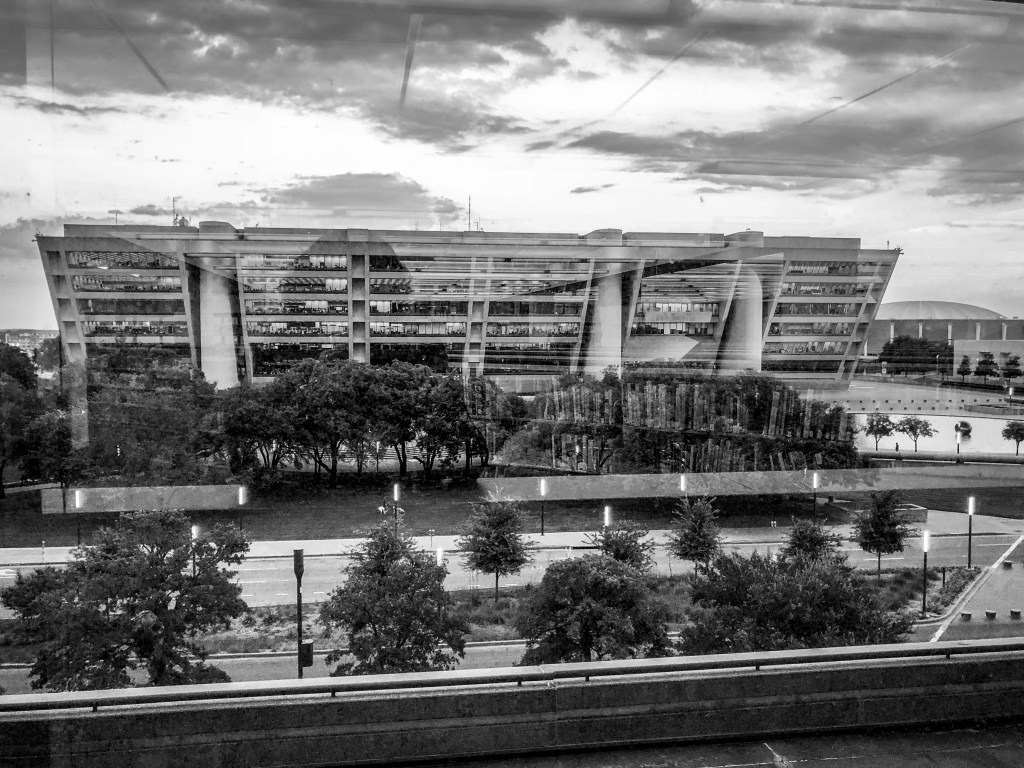
Self-portrait at the Central Library while gazing at Dallas City Hall, 2019.

The plan: I wrote 13 blog posts during my time at DPL, and the goal is to post one per month (if time allows) on this lovely blog. I’ll note the year of publication, context (if needed), and any other changes I might make. Have you ever looked back at something you wrote years ago and immediately hated yourself? Yes, an extra cleanup of each blog post might be in order.

First up—Frank Lloyd Wright’s Music Stand and how the Dallas Public Library accidentally acquired it. Stay tuned!

Frank Lloyd Wright’s Music Stand at Central Library in Downtown Dallas, 2019.

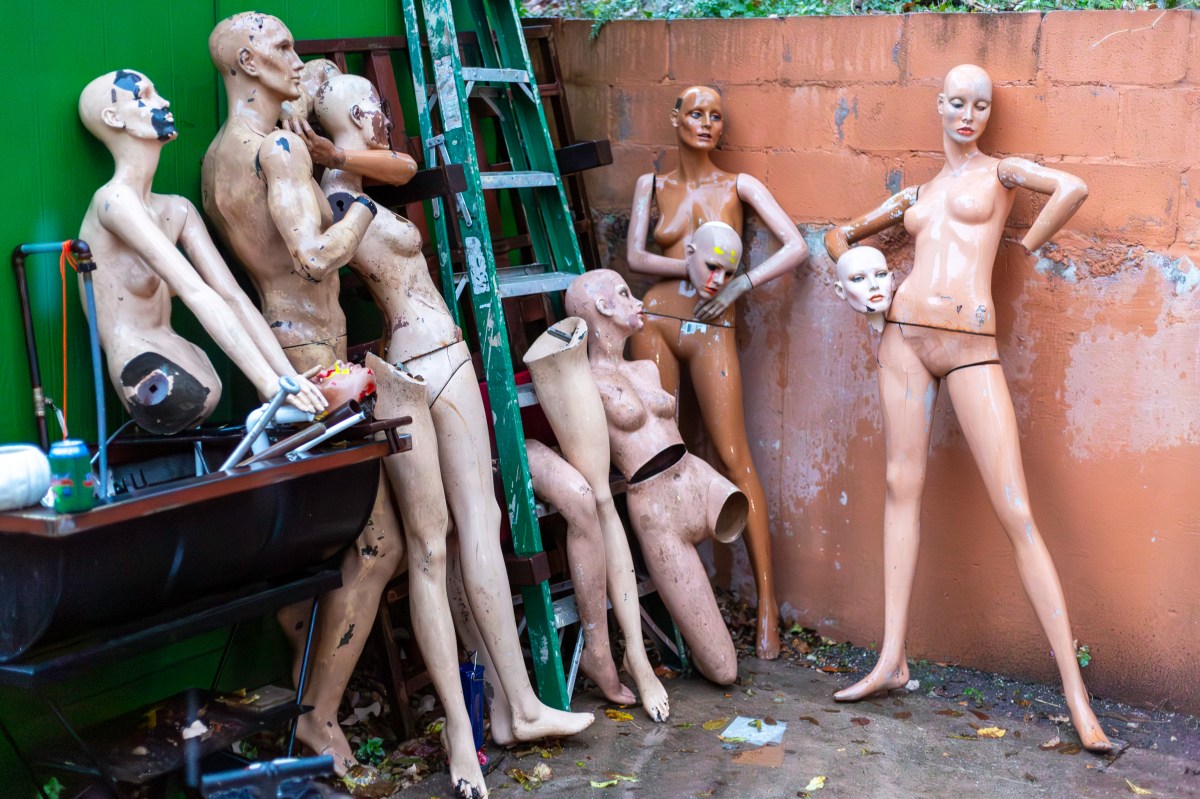
Featured image: Mannequins Gone Wild, 2025.

Categories
art art history comedy humor

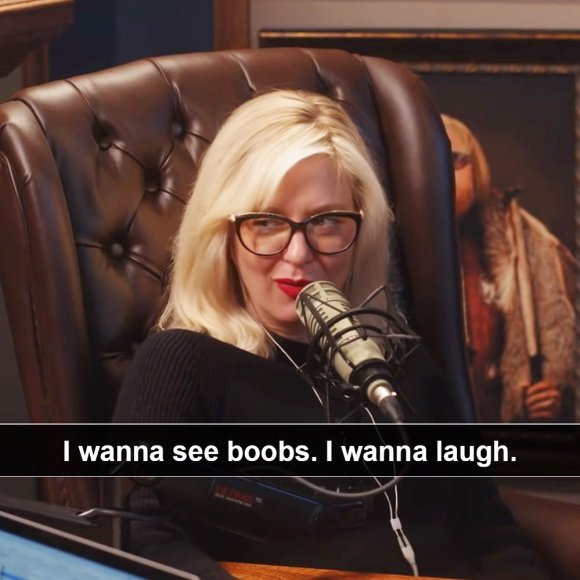
I wanna laugh: a history of humor in art (intro)

Introduction

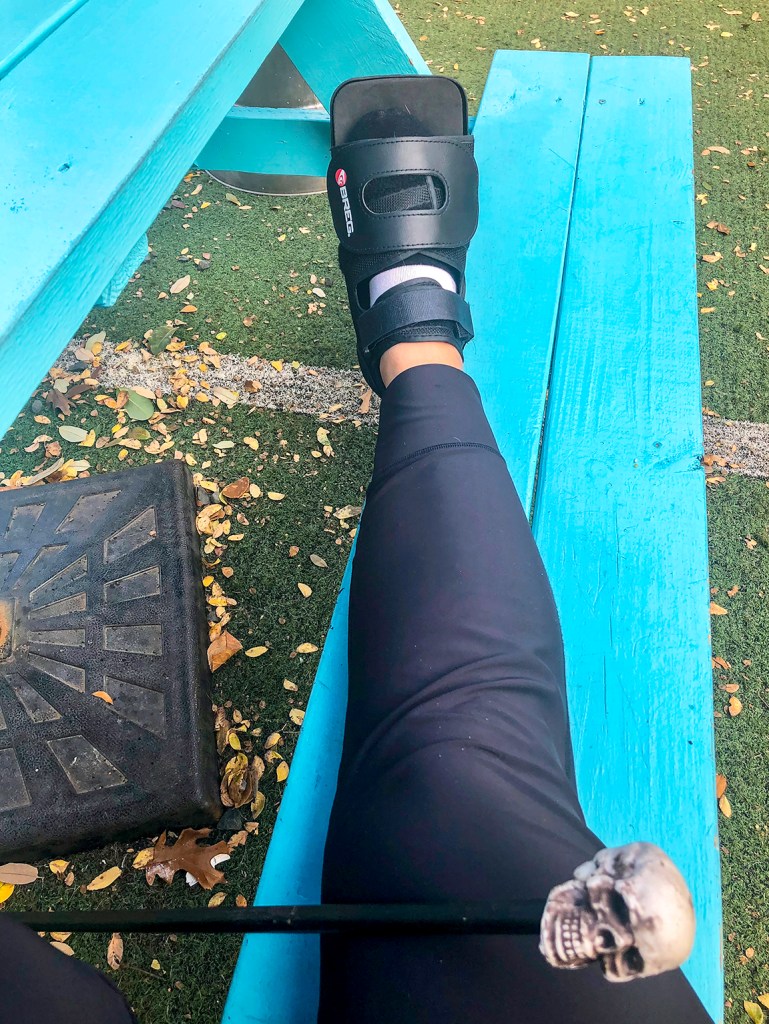
2022 was a great year in comedy. After the two-year shit show that was the pandemic response, I was ready to laugh again. For me, the year actually started in December 2021 when I saw Main Mommy Christina P in San Antonio—with a broken toe. But I was determined! So we trekked down south and I hobbled my way through the LOL Comedy Club with a skull-topped cane in hand. And I was howling by the end of the night! Laughter is, after all, the best medicine.

Booze can help too sometimes. 

But I kept things local for the actual 2022 year. Starting with Tommy Bunz aka Tom Segura in January, I proceeded to laugh my ass off the rest of the year after seeing the great and powerful Joe Rogan (twice), along with Mark Normand, Jessica Kirson, Brian Simpson, and ol’ freckles himself—Bill FUCKING Burr.

We were supposed to end the year by seeing Ari Shafirr in December but a certain someone in my life shit all over those plans (I still love you though). 

And there are plenty more awesome acts on the horizon for 2023! The year already started off with a bang after seeing Tony Hinchcliffe, Chris Estrada, and Sam Morril in January alone. I just saw Shane Gillis last weekend and Steph Tolev last night. Now that bitch is hilarious. I also got Christina P (again!) and Donnal Rawlings coming up soon too so far. Needless to say, I’ve been a little obsessive in my pursuit to laugh. But all this comedic name-dropping is just my long-winded way of saying that I love stand-up comedy—and comedy and humor in general. 

Tony Hinchcliffe at the Addison Improv, Jan. 2023. Zalat Pizza deserves a shoutout too.

As an expression of humor, the art of comedy often comes from a place of darkness, pain, and apprehension. And that’s part of the appeal. Comedy and tragedy go hand in hand. Finding humor in a sea of disaster while uncovering some kernel of truth is what it’s all about. Comedy can be contentious and provocative, yet moving and therapeutic all at the same time. Laughter helps us cope with the absurdities of everyday life. It’s also involuntary—making comedy one of the most honest forms of art. It certainly has gotten me through the last couple years of madness. 

So I stand by the title: I wanna laugh. Inside joke for all the YMH Mommies out there.

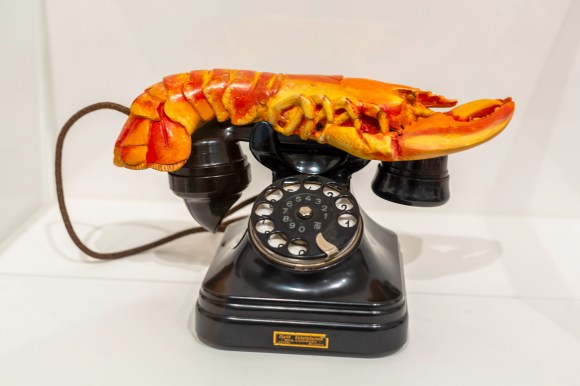
Salvador Dalí, Lobster Telephone, 1938. At the Tate Modern in London.

And as you may already know, I also love studying the history of art. While humor may be fundamental to the human experience, the study of visual humor has largely been ignored by art history scholars. It’s not surprising considering the “serious” and often pretentious nature of the art world—but that’s why I’m here! Your source for stupidly good art history lessons.

Obviously, verbal and visual humor have their differences. While verbal humor is all about timing, usually consisting of stories or observations told bit-by-bit with a punch line at the end, visual humor spills it all at once—and even then it might not always be as apparent as a comedian killing it on stage.

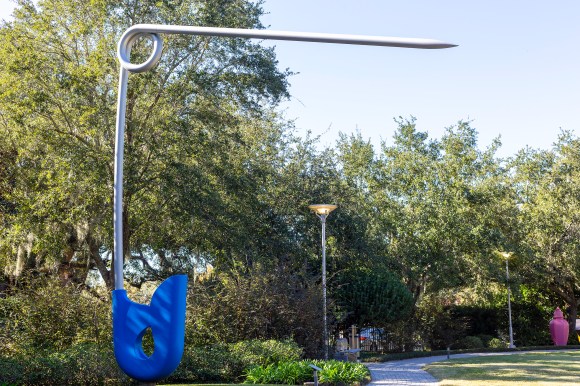
Claes Oldenburg, Corridor Pin, Blue, 1999. At the New Orleans Museum of Art.

But I’ve always been drawn to art that makes me laugh, whether it’s from Marcel Duchamp, Claes Oldenburg, or Jeff Koons and his oh-so-tasteful pornographic aspirations. As I’ve been delving deeper into the world of comedy and humor, I’ve also been asking myself a couple of questions lately as it pertains to this history of art:

  • Where did visual humor in art start and where is it now?
  • What was the first visual representation of comedy? 
  • And how can I entwine these two subjects that I hold so dear?
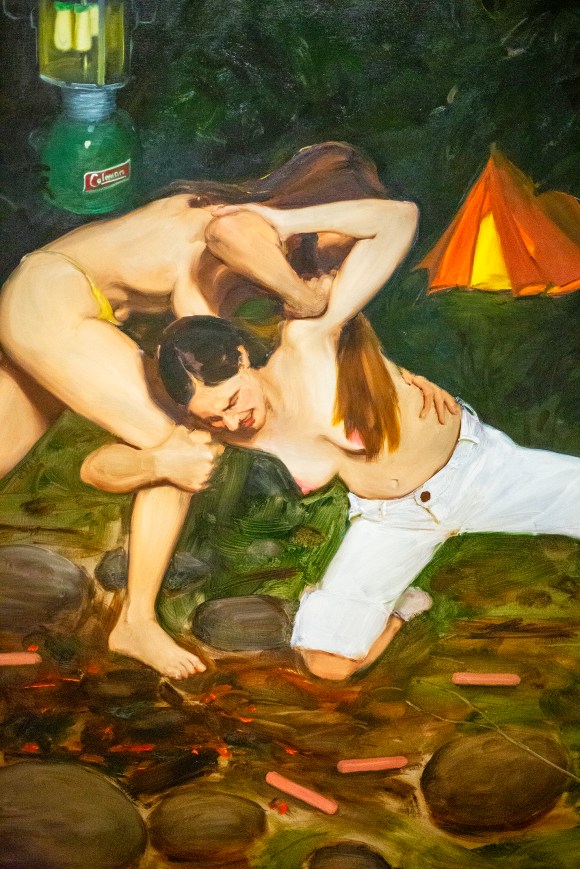
Jenna Gribbon, Weenie Roast Wrestlers, 2019. Women Painting Women exhibit at the Fort Worth Modern Art Museum.

The “plan”

For the unforeseeable future, the plan is to write about the history of humor in art. But in order to contain this beast, I’m going to focus my research on the visual humor of the Western world, primarily visual arts from the Americas and Europe (for now).

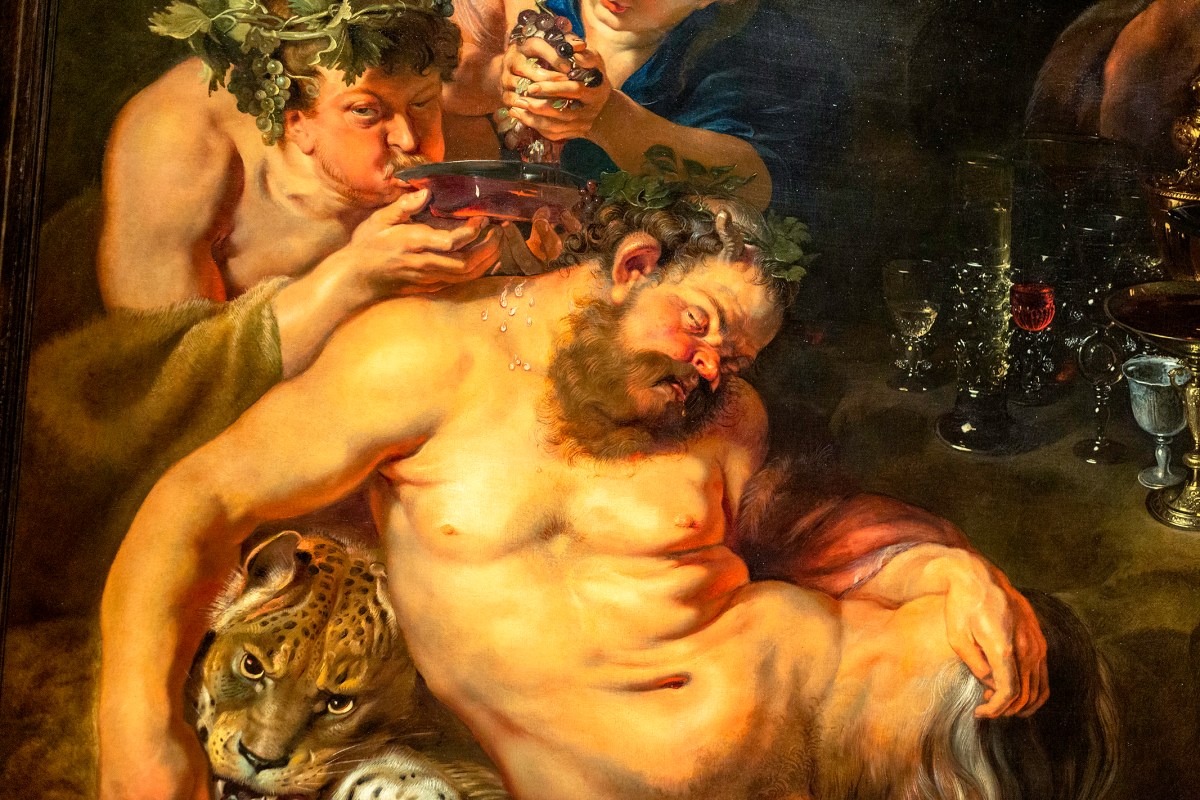
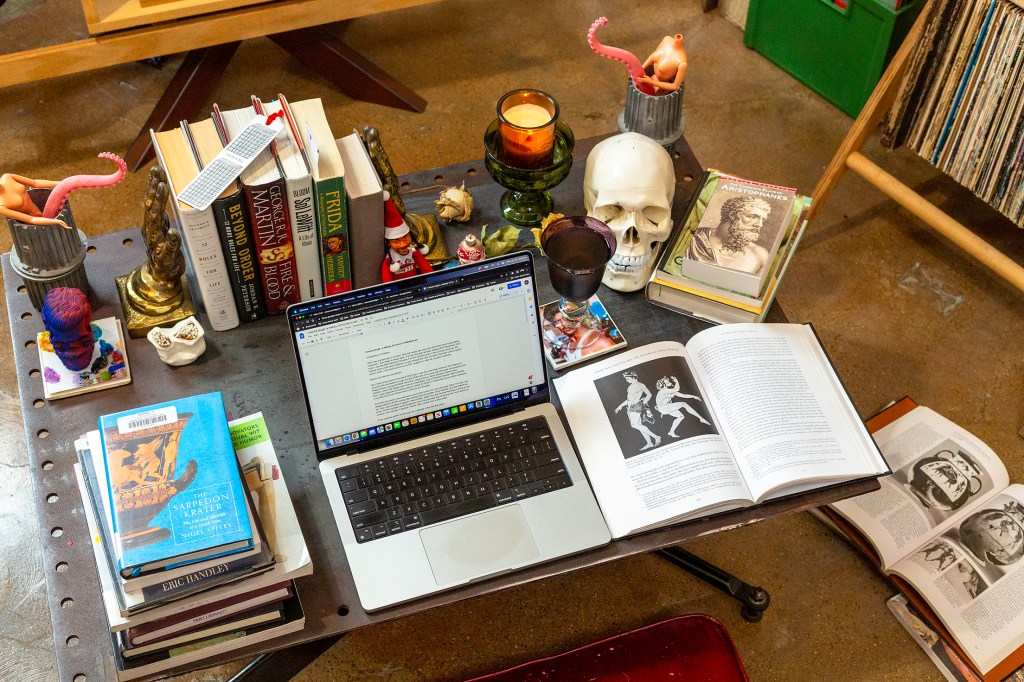
When you’re studying ancient Greek vase paintings, sometimes one must be under the influence of Bacchus to really get it. Let the research begin…

I’ll explore art throughout the centuries that has the potential to make you laugh, but most importantly—art that has the potential to make you think. From comic imagery on ancient Greek vase paintings to Pieter Bruegel’s satiric drawings on the follies of 16th-century Dutch culture to Marcel Duchamp’s literal toilet humor to Banksy’s subversive political messages on the streets around the world in recent memory.

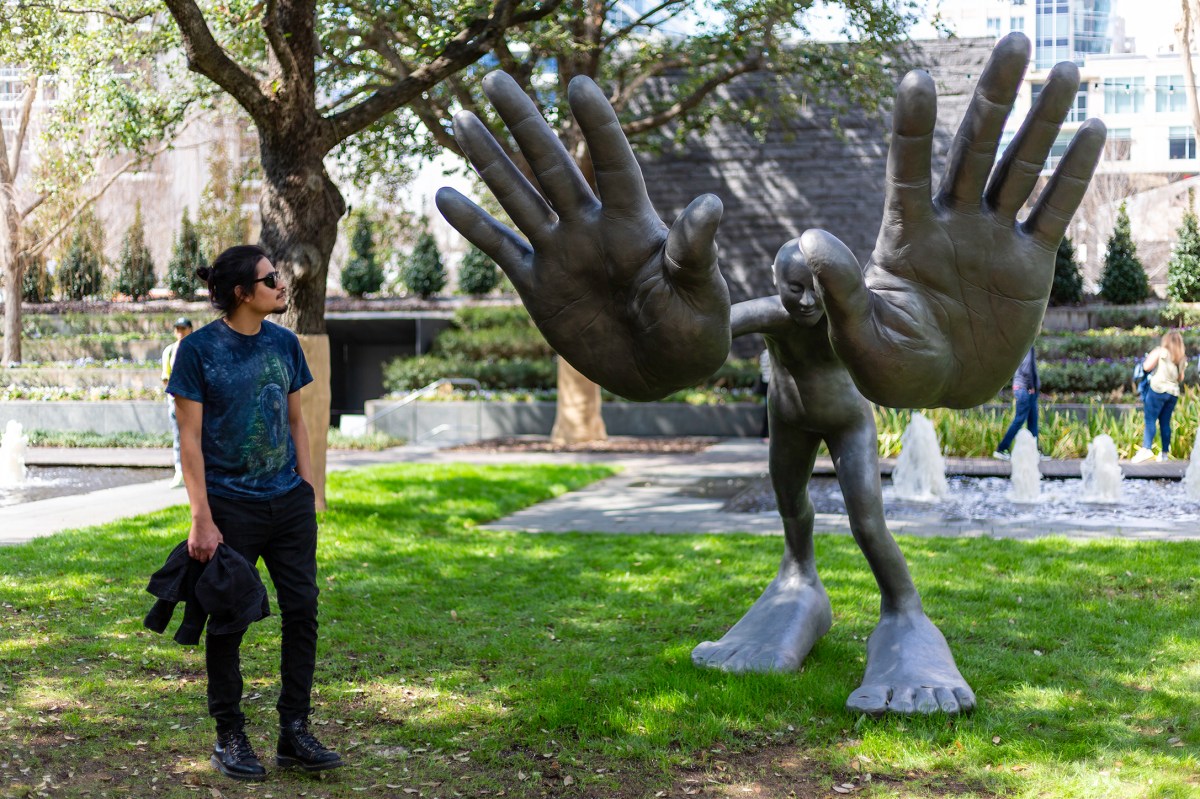
Nic Nicosia, bighands, 2010 (enlarged and cast in 2020). At the Nasher Sculpture Center.

When I say “humor”, I’m talking about whatever the hell makes you laugh. It can be through the use of irony, witticism, satire, dark humor, wordplay, or whatever other type of humor the artist feels is necessary to get their point across, whatever that point may be.  

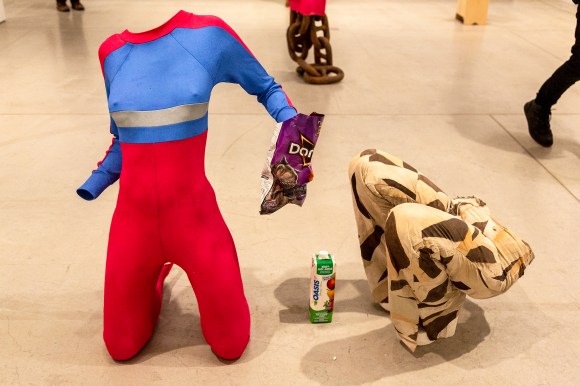
Valérie Blass, Le mime, le modèle et le dupe, 2019. At the Art Gallery of Ontario (AGO).

I haven’t exactly “planned” how often I’ll crank these suckers out (and by “suckers”, I mean thoroughly researched, high-quality art historical writings with a twist), as the history of humor for all Western art is actually quite a long stretch of time.

This writing project could take me years for all I know, and that’s completely fine. I’ve got time. I’m looking to publish a couple posts of my research on the history of humor in art this year, starting with the ancient world and moving forward as I see fit. You’ll just have to stay tuned, dear reader(s). I’m so sure you’re sitting on the edge of your seat in anticipation (and that’s what we call sarcasm).

I might write other art history-related writings in between, but for now—I wanna laugh

Usually how I enter art museums. Also, will Christina P be my friend?
Categories
art art history Uncategorized

Ch-ch-ch-ch-changes…

Hello, people who appreciate art! Guess, what? I quit my job! 

Now I don’t want to get into it here, maybe in a future memoir once I gain enough power. 

But I will say that for the first time in a long time—I feel good. I feel like I finally know what I want for the most part. Let’s be real: things change, people evolve (hopefully). Who really knows, right? The future is uncertain and that’s the great beauty and tragedy of life.

With that said, I for sure know what I DON’T WANT, and most importantly, I’ve realized my time is valuable. I’m 34. I’m not getting any younger. And frankly: I’m just sick of the bullshit.

So with that elegant statement, I’m here to say that I’ve decided to go rogue and become a freelance writer.

I realize that we’re on the brink of World War III, but humor me here.

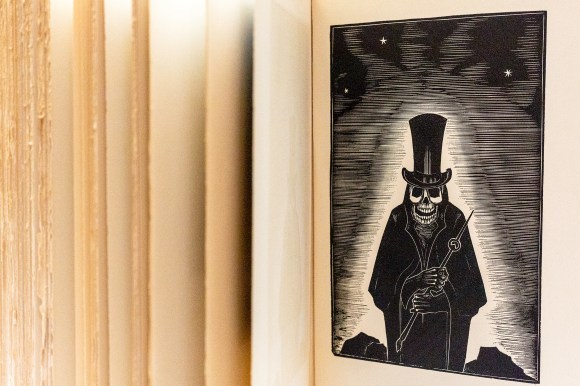
Last page of Gods’ Man by Lynd Ward.

If you’ve ever read my blog posts as an art librarian for Dallas Public Library, you know I love writing about the lives of artists and their work. The whole research process honestly fills me with such great joy. What can I say? I have fun learning new things and understanding the minds of creatives throughout the course of human history.

Well, I’m going to keep doing that but on my own terms now. I’ll still write about the history of art around Dallas (because that’s my hood) but also about whatever the hell else I want to talk about as it relates to art. I’m also interested in comedy, politics, and the culture at large, so anyway I can insert these other areas into the discussion: I will.

I love that a single work of art can tell a story of a particular time and place of a particular people. Like Sol LeWitt, I just want to follow the ideas that interest me most. 

I’m currently reading his biography Sol LeWitt: A Life of Ideas by Lary Bloom and he basically redefined the definition of what art meant up to that point in the late 1960s. The idea itself took precedent over the final execution of the artwork.

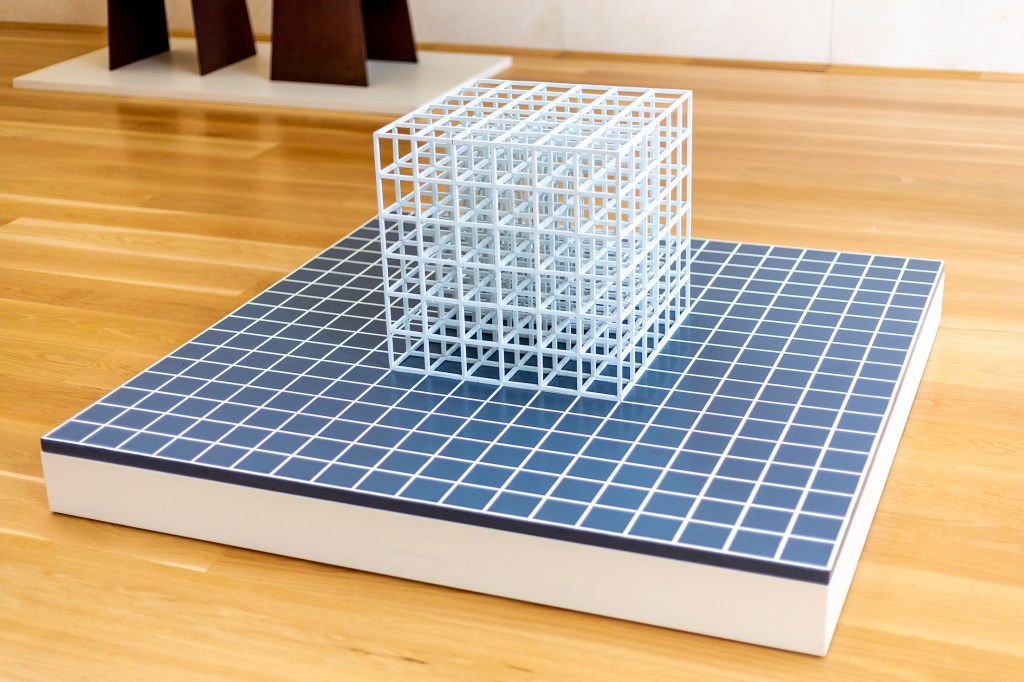
Sol LeWitt, Modular Cube/Base, 1968. At the Nasher Sculpture Center.

The conceptual artist was also a deeply kind, witty soul. He was known for his friendship with Eva Hesse, another pioneering figure at that time who didn’t always get the respect she deserved. She was a woman in the 1960s trying to make it in a male-dominated field, so you get what I’m driving at. 

She struggled, as has been documented in her Diaries, but she was also courageous, ambitious, and oh so talented. And Solly knew this.

Here’s the first paragraph of an inspirational letter he sent to her once:

“Dear Eva,

It will be almost a month since you wrote to me and you have possibly forgotten your state of mind (I doubt it though). You seem the same as always, and being you, hate every minute of it. Don’t! Learn to say “Fuck You” to the world once in a while. You have every right to. Just stop thinking, worrying, looking over your shoulder, wondering, doubting, fearing, hurting, hoping for some easy way out, struggling, grasping, confusing, itching, scratching, mumbling, bumbling, grumbling, humbling, stumbling, numbling, rumbling, gambling, tumbling, scumbling, scrambling, hitching, hatching, bitching, moaning, groaning, honing, boning, horse-shitting, hair-splitting, nit-picking, piss-trickling, nose sticking, ass-gouging, eyeball poking, finger-pointing, alleyway-sneaking, long waiting, small stepping, evil-eyeing, back-scratching, searching, perching, besmirching, grinding, grinding, grinding away at yourself. Stop it and just DO!

I’ve been Eva Hesse and we all need someone like Sol LeWitt in our corner. I like his overall message of just saying fuck the noise, do what you need to do. So that’s what I’m trying to do!

I’ve always been kind of a generalist when it comes to art history. People ask me what my focus is, and I always want to say: “um, all of it”? 

Like Pocahontas, I tend to go where the wind blows. From ancient history to now, my interests are all over the map, as I assume my writing may be. Not to sound grim, but honestly, I prefer my artists dead. Why? Because I can dig further into the past and present what may have been long forgotten. It’s so important to discuss the past, as the great George Orwell once said: “who controls the past controls the future”. Never forget, my friends.

So, what’s up with the blog name—Nature Morte: Stories Through Art? (updated to Nature Morte: Art History for the Rest of Us as of January 7, 2023. Let’s see if it sticks!)

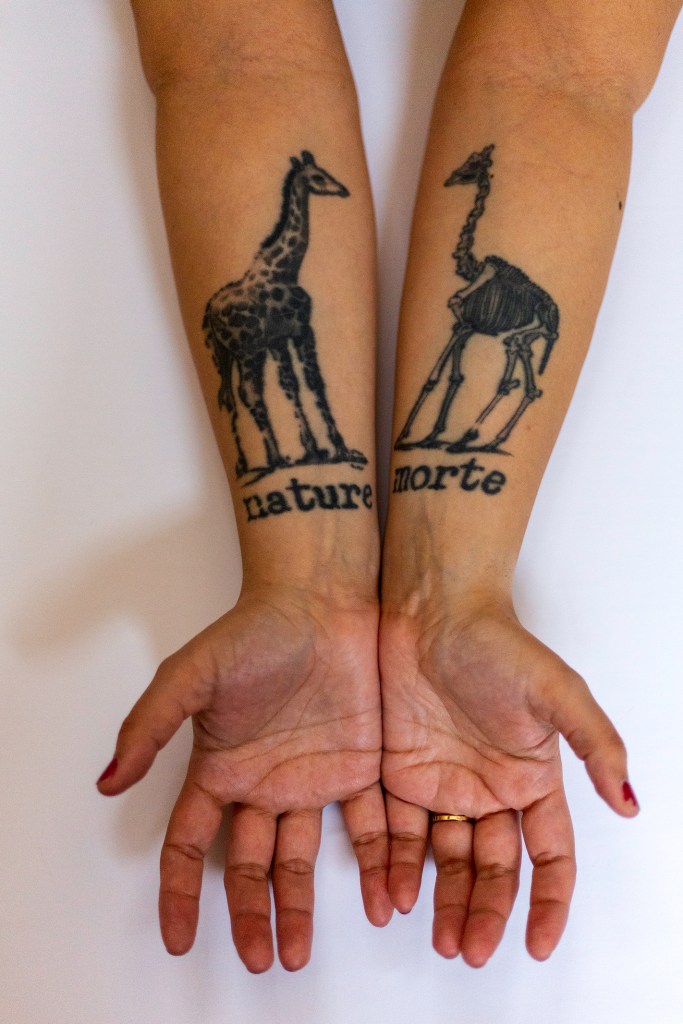
The term nature morte, French for literally “dead nature” was used in the 19th-century to describe still life paintings. And it’s a term that has always intrigued me. So much so that I actually branded myself with it when I was about 20 years years old.

Photo: Jose Sarmiento

I first learned of nature morte in a 19th-century American Art course I took in college. We learned of the hierarchy of paintings in Europe as opposed to America at that time. While history paintings reigned in Europe, landscapes (because we had to be different) dominated in America. However, poor, lowly still life paintings or nature morte was dead last either way.

Maybe it’s because the word DEAD is in it. Maybe it’s because I’ve always rooted for the underdog. But mostly, it’s because I’ve seen some absolutely breathtaking still lifes in my day.

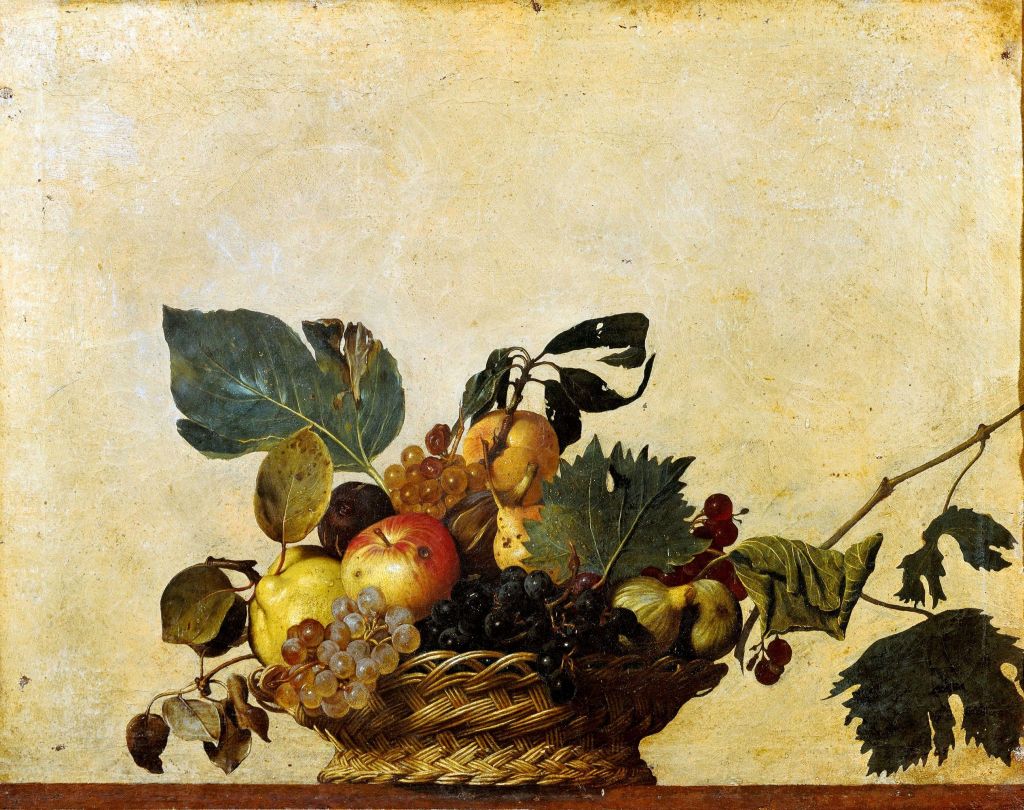
Michelangelo Merisi da Caravaggio, Basket of Fruit, c. 1599.

Come on, how can fruit be so hauntingly beautiful and delicious all at once?

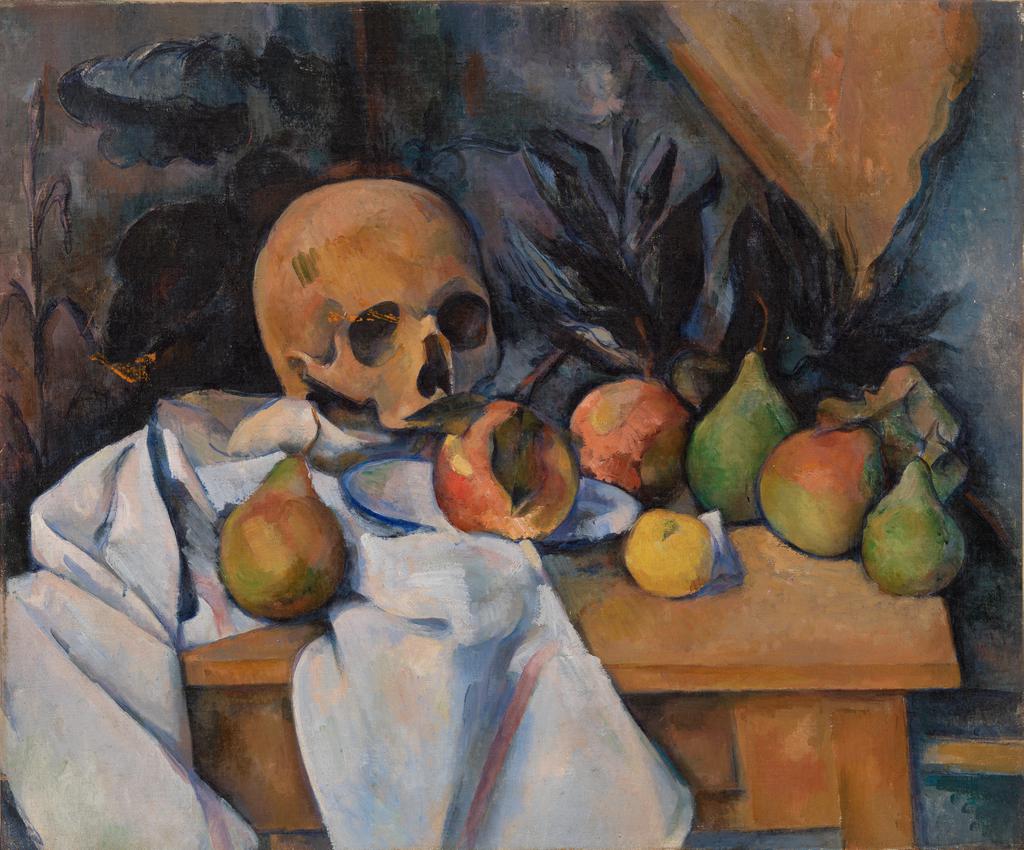
Besides the standard flowers and fruit, artists also put literal morte into their work.

Paul Cézanne, Still Life with Skull (Nature morte au crâne), c. 1890-1893.

I dig it when beauty and the macabre unite. So, that’s what’s up with the name and I’d love to write about the history of nature morte in art in a future (few) posts. Stay tuned!

In addition to art blogging, which obviously won’t pay the bills on its own, I’m also out there freelancing my wordsmith talents to other industries as well. Hey, a girl’s got to eat. I actually have a great writing gig right now (my first!) and you can learn more about it on my About page. 

So, writing is my business now and I couldn’t be happier. It’s been something I’ve explored and enjoyed since a young age, but I finally got the courage to pursue it. Nothing like hitting rock bottom in order to get your priorities straight. I might go broke doing it, but it’s a risk I’m willing to take.

I love libraries and they will always be a part of my world as well. Kind of required for all that fun research I will be doing.

If you’re interested in art, history, and possibly a lot of dumb things in between—here I am.